Stemtree of Spring TX STEM Education Center: Where Futures Begin
When I first walked into Stemtree of Spring TX, the space felt less like a classroom and more like a launchpad. Bright whiteboards caught the afternoon sun, robots hummed softly in a back corner, and a child stood with a tablet, eyes widening as a line of code finally translated into a spinning turbine. That moment wasn’t staged. It was a quiet confirmation of what many schools struggle to articulate: STEM learning deserves to feel meaningful in the moment and durable over time. Stemtree has built a center that teaches both, nurturing curiosity while scaffolding competence so that kids leave not just with correct answers, but with a sense of how to ask the right questions.
The center sits at a crossroads of neighborhoods in Spring, a place where families juggle work schedules, carpool lines, and a constant stream of after school options. Yet Stemtree stands out because it has committed to a particular future for every student who steps through its doors. The mission is explicit, and the execution is practical: make STEM accessible, make it relevant, and make it feel possible for every learner, regardless of where they started. Over the years I’ve watched as this philosophy ripples outward, shaping not just what kids do in a session but how they move through the world beyond the classroom walls.
What follows here isn’t a glossy sales pitch. It’s a portrait drawn from real experiences inside Stemtree of Spring TX, amplified by the voices of families, instructors, and students who have learned to code, construct, and think critically in a setting that respects their time and ingenuity. The center’s walls aren’t adorned with awards alone; they display proofs of progress—photos of budding engineers, notes from parents about new routines at home, and timelines showing the arc from simple sensors to integrated projects that take weeks to complete.
A real-world approach to STEM is not a single skill set but a tapestry of competencies that reinforce one another. At Stemtree, coding is not merely about syntax or the thrill of a robot following commands. It’s a vehicle for building persistence, debugging resilience, and collaborating with peers who bring different strengths to the table. Robotics classes for kids at Stemtree are less about assembling a gadget and more about learning to anticipate failure, adjust plans, and communicate technical ideas with clarity. Coding classes for kids then become the bridge that translates those ideas into sequences, simulations, and, increasingly, real-world applications. And in the middle of it all sits a philosophy that you can feel with every instructor, every intervention, and every project deadline met with a quiet sense of momentum.
Center culture matters as much as curriculum. Stemtree’s Spring TX center has cultivated an environment where questions are the norm, not the exception. You won’t hear a drill-sergeant style insistence on a single “correct” path. Instead, teachers guide students through exploration, offering feedback that isn’t punishive but precise. If a student stumbles on a problem, a mentor will pause the clock long enough to ask the right question, not the easiest one. The aim is not to produce compliant learners but to cultivate independent thinkers who can navigate ambiguity with a map in their head of how to approach problems.
This is especially true in after school stem programs at Stemtree. The day’s pace is designed to fit a student’s energy curve. Some sessions open with a quick warm-up that primes the mind for logical thinking, others dive straight into a hands-on build that requires quiet collaboration. The structure is deliberate, but the feel is loose enough to accommodate curiosity. A good session might begin with a short problem statement and end with a reflection circle where students explain what they learned, what didn’t work, and what they would try next. In between, there are moments of purposeful friction: a robot that refuses a line, a code block that doesn’t execute, a sensor that reads an unexpected value. The response is never to bulldoze forward. It’s to step back, reframe, and test again. Those micro-resets are the real education, teaching children that mastery often arrives through iteration rather than instantaneous insight.
A hallmark of Stemtree’s impact in Spring TX is the way it scales from beginner exposure to more ambitious, long-form projects without losing the personal touch. Beginners are not talked down to; they are welcomed into a community where questions from the first week are valued just as much as the final project’s triumph. As students gain confidence, instructors shift from providing direct answers to guiding a process—how to break down a problem, how to test a hypothesis, how to document decisions so someone else can understand your reasoning. It’s a pedagogy that mirrors real-world engineering teams, where communication, process, and shared goals matter as much as the outcome itself.
For families, the practical considerations matter almost as much as the pedagogy. Bell schedules, transportation, and tuition are realities that shape decisions about after school options. Stemtree’s model is mindful of those constraints without compromising the quality of learning. The center tends to run after school programs that align with school dismissal times, offers flexible scheduling across the week, and provides a clear path for progression from one tier of learning to the next. The costs are balanced by the value of sustained engagement; kids aren’t signing up for a one-off workshop but for a continuum of growth that articulates what comes next in a student’s journey through STEM.
The outcomes speak for themselves, though not in flashy promises but in measurable progress. Start with the most obvious indicators: improved test performance in quantitative reasoning and increased confidence in tackling multi-step problems. But beyond the numbers, there are subtler shifts that often go unreported in reports or brochures. A shy student becomes a team lead during a capstone project. A newcomer to robotics not only understands the mechanics of a motor but can explain how changes to a program alter the robot’s behavior. A family begins to see learning as a daily habit rather than a weekly event, integrating small coding challenges into car rides or kitchen table conversations. These are not wins isolated to a classroom; they are gains that percolate through a family’s routines and a student’s self-concept.
The center’s approach to robotics stands out in particular. Robotics classes for kids at Stemtree are not about accumulating a trophy case of completed builds. They are about learning to design with constraints in mind: limited time, a finite budget for parts, and the need to work cohesively with teammates. The process teaches resourcefulness—the skill of finding a solution within given parameters rather than defaulting to the easiest path. Students learn to prototype quickly, test iteratively, and reflect on what the results say about their assumptions. This practical cycle mirrors real engineering work and makes the content feel less theoretical and more consequential.
Equally compelling is how Stemtree connects coding with broader STEM literacy. Coding classes for kids are not deployed in a vacuum. They exist as part of a larger ecosystem that includes math, science, and design thinking. In Spring TX, where local schools often rely on limited resources for advanced coursework, Stemtree fills a gap by offering accessible, hands-on experiences that complement classroom learning. The most successful students emerge not with a single skill mastered but with a toolkit they can carry to science fairs, project-based learning assignments, and even independent exploration at home. The center’s educators emphasize documentation, version control, and collaborative communication, all essential habits for future scientists, engineers, or even entrepreneurs who want to translate ideas into tangible outcomes.
What differentiates Stemtree from Stemtree of Spring other after school programs is the human factor—the caliber of mentors who stay with a cohort over several months, the way they push students to articulate their thinking, and the patience they show when a concept doesn’t click right away. It’s a common misconception that great STEM programs rely on dazzling equipment alone. In reality, the most durable learning comes from mentors who know when to challenge a student and when to nurture a moment of curiosity. Mentors at Stemtree understand that every learner arrives with a different background, and they tailor guidance without ever diluting high expectations. They celebrate precise wins—like a student debugging a piece of code that previously produced a stubborn error—and they acknowledge the quiet satisfaction of incremental progress, which often goes unnoticed in a fast-paced digital culture.
In Spring TX, families often ask what makes Stemtree worth the investment. My answer is built from years of watching students grow into capable problem solvers. It’s not about turning kids into tiny engineers overnight. It’s about giving them repeated opportunities to practice curiosity in a safe, well-structured environment where failures are treated as essential data points rather than as reasons to quit. It’s about building a community that respects sustained effort, not just dramatic breakthroughs. It’s about giving students, especially those who might not see themselves reflected in the media’s narrow portrayal of scientists, a place where their ideas can take root and mature.
The center’s design also acknowledges the practical realities of life in Spring. Parents juggling work shifts will appreciate the flexibility of scheduling, the clarity of communication around session goals, and the transparent progression path that shows exactly what comes next in a learner’s journey. Instructors are careful to connect classroom activities to authentic, everyday contexts. For example, a unit on sensors isn’t merely an exercise in reading data; it becomes a discussion about how a smart home might respond to weather changes, how a wearable device tracks activity, or how a factory floor uses automated feedback to optimize efficiency. These threads help keep learning grounded in reality and prepare students for a future where STEM is interwoven with daily life, rather than an abstract pursuit.
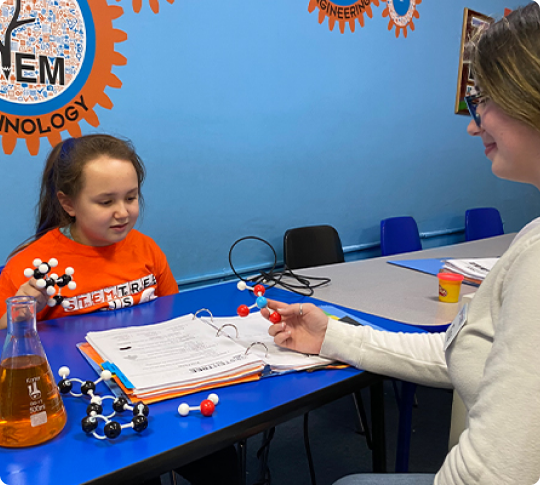
The space itself invites collaboration. It is configured to support teamwork without sacrificing individual accountability. Workstations are accessible, but not overwhelming, designed to allow small groups to toggle between guided instruction and independent exploration. The furniture is adaptable, enabling a quick reconfiguration to accommodate a range of activities—from a rapid prototyping sprint to a longer-term capstone project. Quiet corners provide space for reflection when a student needs to step back and reframe a problem, while open tables welcome the friction that arises when a team negotiates different approaches. The result is a culture that values both process and product, a balance that mirrors real-world engineering teams where collaboration and personal initiative are both indispensable.
For families considering Stemtree, a good next step is to observe how sessions unfold in a typical week. Visit during an afternoon open house or schedule a short observation in a class that matches your child’s interests. Observe how instructors interact with students: watch the cadence of questions, the way feedback is delivered, and the speed with which students are invited to take ownership of a task. You’ll notice a respectful rhythm—pace that respects a child’s concentration while keeping the energy high enough to sustain momentum. You’ll also notice how the instructors celebrate a student’s breakthrough in a concrete, tangible way. It isn’t about loud applause; it’s a quiet nod, a specific praise about a method that worked, or a reminder about the next target in the learning plan.
To package the experience in a more digestible form for busy families, here are two concise snapshots that help clarify what makes Stemtree unique. They are not checklists to be ticked off, but quick references to anchor conversations with children about their learning journey:
-
What families can expect from after school stem programs Stemtree of Spring TX offers: a progressive ladder of learning that moves from exposure to mastery, a mentorship model that preserves curiosity while building competence, flexible scheduling to meet families where they are, a community that treats mistakes as essential to growth, and a clear pathway that connects in-center activities to real-world applications.
-
How sessions are structured in a typical week: a short warm-up to energize thinking, a guided exploration phase where mentors pose big questions and provide scaffolded tools, a collaborative build where students prototype and iterate, a reflective wrap where teams articulate what they learned and what they would try next, and a family-friendly debrief that helps parents understand the learning goals and the progress made.
These micro-patterns echo in every cohort and every project. They are not mere routines; they are the scaffolding that helps students translate a problem into a plan, a plan into a prototype, and a prototype into a narrative they can share with others. And that narrative is the payoff. It’s the ability to tell a story about one’s thinking—how a problem was approached, what hypotheses were tested, which constraints dictated a design decision, and how collaboration shaped a solution. In the long arc of education, those are the kinds of competencies that travel beyond the classroom and into college, careers, and lifelong curiosity.
Of course, every program has its edge cases and limitations, and Stemtree is no exception. There are weeks when a project seems to resist all reasonable attempts at resolution, and a student feels the sting of a stubborn bug or a failed prototype. In those moments, the center leans into a few steady principles. First, progress is rarely linear. Second, reflection is not a separate activity but an integrated part of the work. Third, teachers and mentors are trained to recognize when a student needs a different vocabulary to explain what they’re thinking, whether that means drawing diagrams, narrating a step-by-step plan aloud, or using analogies from everyday life. Fourth, it’s okay to pause and switch gears to preserve momentum rather than force a solution that doesn’t fit. These are not mere concessions; they are deliberate design choices that protect the integrity of learning and preserve the student’s confidence.
The broader context matters as well. In Spring TX, as in many communities, schools are navigating budget constraints, shifting curricula, and the pressure to demonstrate measurable outcomes. Stemtree’s model offers a complementary path, one that complements school-based instruction rather than competing with it. Students who participate in after school stem programs Stemtree of Spring TX often bring back fresh questions to their classrooms, engage more deeply with projects that align with what they study at school, and approach science and math with a sense of agency that is less common among their peers who have not had similar hands-on experiences. The effect is cumulative: more students who view themselves as capable contributors to scientific discourse, more families that value ongoing, long-term engagement with STEM, and more communities that recognize the value of personalized learning pathways.
The future that Stemtree promises is not a single destination but a direction. It is a commitment to ongoing development, to the idea that curiosity can be cultivated, and to the belief that every child deserves access to a high-quality STEM education center that respects their pace while challenging their aspirations. In Spring TX, where families carve time out of busy schedules and children balance school with a growing interest in technology, Stemtree stands as a steady, reliable partner. It is a place where futures begin not with a loud proclamation but with a quiet, persistent invitation to try, test, and tell a story about one’s thinking.
If you’re a parent or caregiver considering enrollment, you deserve a candid picture of what the experience entails. The value isn’t measured in one stellar project or a rumor about a celebrity coder who started in a similar program. It’s in the daily practice: the way a learner begins to articulate a problem, the manner in which a mentor nudges them toward a solution without dictating the path, and the patience with which school and home life converge around a shared goal. It’s in the logistics too—the ease of scheduling, the clarity of communication, and the transparent progression from introductory exposure to more challenging, integrated projects. All of these elements together create a learning ecosystem where STEM becomes accessible, meaningful, and, above all, doable for kids who may not yet see themselves as the kind of people who belong in science or engineering.
Over time, I have observed a few habits that consistently distinguish Stemtree’s approach from other options in the area. The first is a relentless focus on narrative as a learning tool. Students are encouraged to document their work, present their decisions, and explain how a given constraint changed their design. The second is the emphasis on peer learning. Kids who arrive with different strengths collaborate, leaning on each other to test hypotheses and refine conclusions. The third is the de-emphasis of fear around failure. When an experiment doesn’t go as planned, mentors model a calm, analytical response, guiding students to extract lessons instead of letting frustration derail progress. The fourth is the long view. Short workshops are valuable, but the center’s core advantage lies in its ability to scaffold growth across weeks and months, building a durable sense of capability that can ride through the inevitable plateaus of learning.
To speak to the quality of instruction, consider a typical multi-week robotics project. At the outset, students might be asked to design a basic autonomous path for a small rover. They begin by outlining a set of constraints—battery life, speed, obstacle avoidance—and then they prototype with simple sensors and motors. In week two, the same cohort revisits the design after receiving feedback from mentors and peers. The modifications are not grandiose leaps; they are thoughtful tuning of the existing system: changing the sensor sensitivity, adjusting the control logic, or reconfiguring the chassis to improve stability. By week four or five, the group presents a polished, well-documented solution that demonstrates not only the rover’s functionality but also a clear rationale for every decision. The students can articulate what would happen if a constraint changes and can defend their approach with evidence gathered during testing. That kind of synthesis is precisely what makes a STEM program worth investing in.
The center’s leadership team is transparent about goals and challenges. They publish a flexible plan that outlines capabilities for a given semester, but they also leave room for emergent projects that reflect student interests. This balance between structure and spontaneity helps maintain momentum while ensuring that learning remains personal. It’s a tricky balance to strike, yet Stemtree seems to manage it gracefully, guided by a core belief that every learner has a unique route to expertise. This belief translates into customized support plans for students who need extra time with core concepts and accelerated tracks for those who show readiness to tackle more advanced material. The approach is not a one-size-fits-all curriculum. It is a living system that adapts to the needs of real children who come from real families with real responsibilities.
If you’re a teacher, a mentor, or an administrator looking at Stemtree from a professional lens, the most compelling insight is the way the center aligns practical work with measurable growth. The projects are designed to be visible in a classroom or a family setting, so progress is not hidden behind private dashboards or obscure rubrics. A student who builds a functioning sensor network in a project display has a tangible artifact that demonstrates both technical skill and collaborative ability. And because the center emphasizes documentation and reflection, the learning is easy to transfer to a school setting, where a student can discuss a project with a teacher in explicit terms that make the learning visible to others.
The long arc of Stemtree’s impact in Spring TX is still unfolding. Each cohort leaves behind more than a set of coded programs or a finished robot. They carry forward a habit of disciplined inquiry, a sense that innovation is a process rather than a mystery, and a confidence that they can contribute meaningfully to projects that affect their communities. In a landscape crowded with after school options, Stemtree offers a compelling blend of accessibility, rigor, and humanity. It is a place where futures begin with a single, deliberate step into a room filled with curious minds, patient mentors, and equipment that is welcoming rather than intimidating.
For families considering this path, the invitation is practical as well as aspirational. Arranging a trial visit is a low-stakes way to gauge fit: observe how a session flows, how students engage with one another, and how mentors respond to questions big and small. If the fit is right, you’re not committing to an endless stream of hours; you’re opting into a scaffolding that can grow with your child over the next several years. The core idea is not to press for rapid mastery of every topic but to cultivate a reliable, personal pathway into STEM that remains accessible even as interests evolve. In a world that often feels saturated with quick fixes and transient trends, that stability is a rare and precious asset.
As the narrative of Stemtree in Spring TX continues to unfold, one constant remains clear: the center is more than the sum of its parts. It is a practice, a culture, and a commitment to helping young people see themselves as capable builders, designers, and problem solvers. The space invites exploration and expects rigor, treats mistakes as essential data, and recognizes that learning is a social act as much as a solitary pursuit. In that sense, Stemtree is not merely a place to learn STEM; it is a community that embodies the discipline, patience, and curiosity that powerful education requires.
The path forward for Stemtree, as with any reputable STEM program, will involve listening carefully to the students and families who participate. It will require maintaining the balance between structured guidance and open-ended exploration, ensuring that every learner can move at least one notch further along the ladder of mastery with each visit. The trends in child development align with what the center already demonstrates: when students feel seen and their ideas are treated with respect, their intrinsic motivation grows. They begin to own their learning, push beyond comfort zones, and see the connection between effort, strategy, and outcomes.
In concluding this reflection, consider the lasting impression Stemtree of Spring TX leaves on a community that is hungry for practical, meaningful STEM engagement. The center does not just teach kids how to code or how to build a robot. It teaches them how to think like engineers, how to collaborate effectively, and how to persist when a problem refuses to yield. It teaches families how to participate in their child’s learning journey in a way that is constructive and collaborative, not prescriptive. And it teaches the broader ecosystem that high-quality, after school STEM education can be accessible, adaptable, and deeply enriching.
If you want to understand what futures begin at Stemtree, look for the quiet, durable indicators: a student who explains a process with clarity and nuance, a team that iterates together with respect for each teammate’s contribution, and a family that integrates learning into daily life with curiosity and pride. These are the markers of a program that reaches beyond the moment and leaves a lasting imprint on a learner’s trajectory. Stemtree of Spring TX is not a destination; it is a starting line—a place where learners encounter questions that matter, meet mentors who believe in their potential, and gain the confidence to pursue paths they might not have imagined.